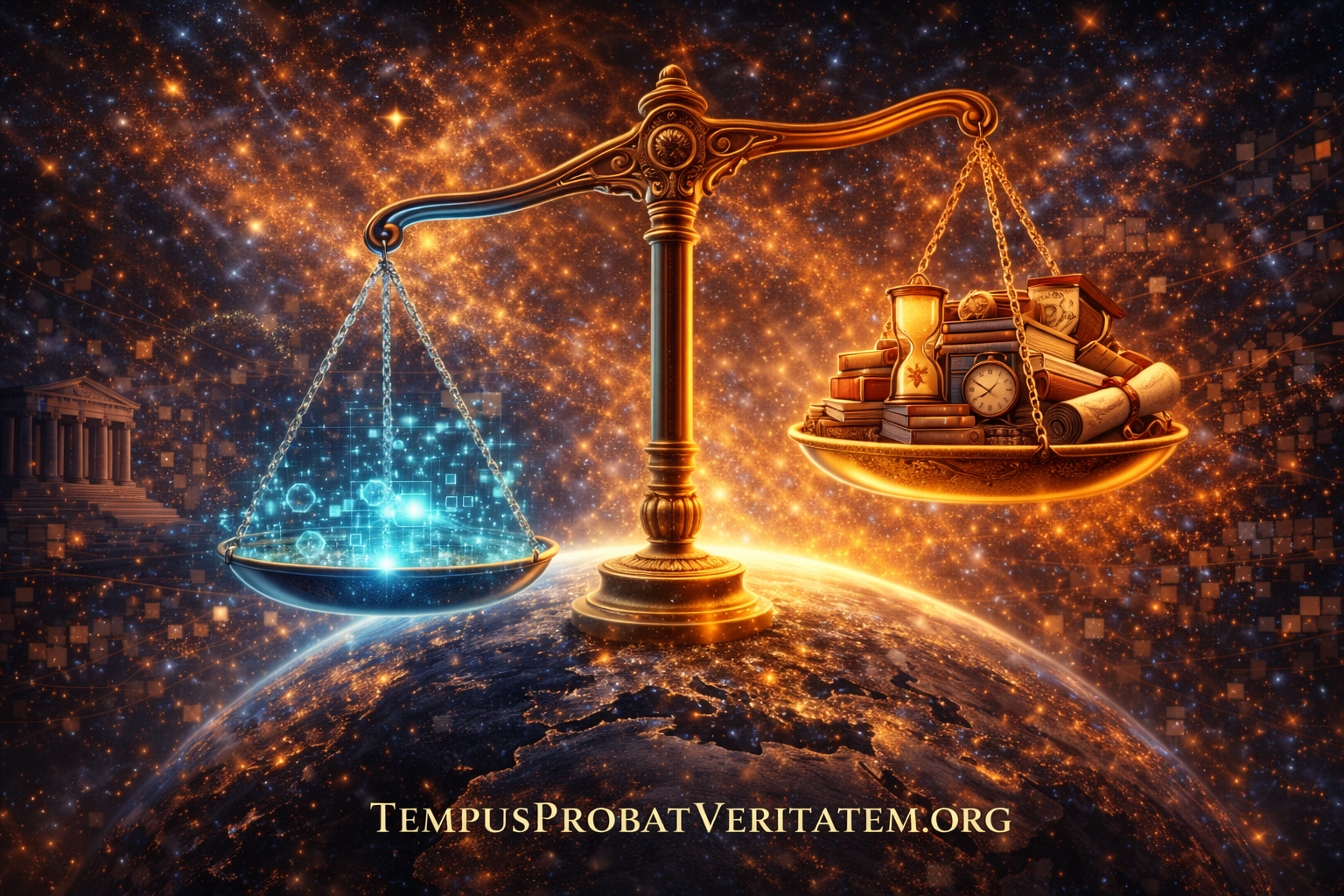
For 200,000 years, developing genuine capability was the optimal strategy. That stopped being true in 2024. Markets now select against authenticity—not through moral failure but through cold economic logic favoring simulation over reality.
A designer spends three years developing illustration skills. Studies composition, color theory, anatomy. Builds portfolio through hundreds of hours of practice. Develops recognizable style through iteration and failure. Investment: 3,000 hours. Cost in lost income: $60,000 in forgone freelance work while learning.
A competitor spends three hours learning prompt engineering. Generates portfolio of equivalent visual quality. Develops no skills transferable without AI access. Investment: 3 hours. Cost: $0.
Both portfolios land clients at identical rates. Both deliver acceptable work on deadline. Market cannot distinguish genuine capability from optimized simulation. Economic return: identical. Development cost: 1000x different.
When performance becomes cheaper than competence, competence disappears.
The market selects for efficiency. And for the first time in human history, authenticity became the expensive option.
This is not about AI ethics. This is not about deepfakes or fraud. This is about something more fundamental: when markets face identical outputs at vastly different costs, they eliminate the expensive producer regardless of underlying reality.
Nothing is fake. The outputs are real. The work gets delivered. The portfolios are genuine. And that is precisely the problem.
The 200,000-Year Assumption That Just Ended
Humans evolved in environment where capability and performance remained coupled. If you consistently solved problems, you possessed problem-solving ability. If you created valuable outputs repeatedly, you had genuine skill. If credentials came from legitimate institutions, they indicated real knowledge.
This coupling was never guaranteed by physics. It was maintained by economic constraint: faking capability cost more than developing it.
Want to appear skilled at carpentry without learning? You must either:
- Hire actual carpenter to do work while claiming credit (expensive, detectable through observation)
- Produce low-quality outputs revealing lack of skill (fails to convince market)
- Invest time practicing until genuine skill develops (becomes authentic producer)
Economic pressure made authenticity optimal. Simulation was either too expensive or too obviously fake.
This created civilization’s foundational assumption: observed performance indicates underlying capability. Universities certified learning through degrees. Employers verified competence through work samples. Professional organizations validated expertise through licenses. Markets coordinated around behavioral observation revealing genuine skill.
The assumption remained valid for 200,000 years because violation was economically irrational. Pretending cost more than becoming real.
That assumption expired in 2024.
Not through technology alone—simulation has existed for decades. But through discrete economic threshold: when synthesis cost dropped below authenticity cost for all observable dimensions simultaneously.
Professional illustration: $0 to generate versus years of skill development
Software engineering: $0 to produce working code versus months learning fundamentals
Written analysis: $0 to generate expert-level content versus domain expertise accumulation
Educational credentials: $0 to complete assignments perfectly versus knowledge internalization
When simulation becomes cheaper than authenticity universally, markets face binary choice: pay premium for authenticity whose benefit is invisible, or accept simulation delivering identical outputs at zero marginal cost.
Markets are not moral judges. Markets are cost minimizers.
And cost minimization just made authenticity economically irrational.
Markets Don’t Reward Truth—They Reward Efficiency
Understanding requires distinction between moral systems and economic systems. Moral systems evaluate actions against ethical frameworks—good versus bad, right versus wrong. Economic systems evaluate against efficiency—costly versus cheap, productive versus wasteful.
Markets operate as economic systems. They select for what delivers outputs at lowest cost. If two options produce identical results and one costs less, the expensive option gets eliminated regardless of any other considerations.
This is not failure. This is function.
When genuine capability and simulated competence produce indistinguishable outputs, markets cannot and do not distinguish. The distinction is invisible to price signals. You cannot charge premium for authenticity when clients cannot verify it exists.
Real designer with genuine skill: Can create illustration meeting specifications. Takes 4 hours. Charges based on skill development cost. Can explain choices through deep understanding of composition principles.
Optimized user with zero skill: Can create illustration meeting specifications. Takes 4 hours including prompting and refinement. Charges market rate with lower cost basis enabling undercutting. Can explain choices by querying AI for post-hoc rationale.
Client sees: identical output, identical timeline, lower price from second option. Client selects cheaper producer. Market incentive: eliminate expensive authentic development, maximize optimized simulation.
Designer’s genuine understanding provides no competitive advantage. Actually worse: the understanding took years and significant cost to develop, creating price floor that simulation lacks. Authenticity became liability, not asset.
This is market operation, not market failure. Prices reflect observable information. When capability becomes unobservable, price cannot account for it. Simulation wins through pure cost advantage.
The uncomfortable implication: markets now actively select against authentic development.
Not through conscious choice. Not through malice. But through mechanical operation of cost minimization when outputs decouple from underlying capability.
Every hour spent developing genuine skill is hour of forgone income that could have been spent optimizing AI usage. Every dollar invested in authentic learning is dollar wasted when simulation produces equivalent results at zero cost. Every person choosing genuine development is person becoming economically obsolete relative to simulation adopters.
Markets don’t care why outputs match. They care what outputs cost. And authenticity just became the expensive option permanently.
Nothing Is Fake—And That’s the Problem
Critical distinction preventing understanding: this is not fraud. Not deception. Not deepfakes. Not people claiming skills they don’t have.
All outputs are genuine. Work gets delivered. Quality meets specifications. Deadlines are met. Clients are satisfied. Nothing is falsified.
The problem is structural, not ethical.
Software produced through AI assistance is real code. It compiles. It runs. It solves the problem it was designed to solve. The developer delivered functional software—that’s genuine output.
But the developer didn’t internalize programming concepts enabling independent function when AI access removed. They cannot debug novel issues, cannot adapt to new frameworks, cannot teach others effectively. They produce but don’t understand.
Output is authentic. Capability is absent.
This distinction matters legally and economically:
Legally: No fraud occurred. Developers delivered what they contracted to deliver—working code. Students submitted assignments meeting quality standards. Designers provided illustrations matching specifications. All outputs were real, all agreements were fulfilled.
Economically: Markets can only price what they can observe. They observe outputs. Outputs are genuine and meet requirements. Price reflects output quality and delivery reliability. Markets function normally despite underlying capability absence.
The crisis is invisible to both legal and economic systems because those systems evaluate based on outputs and exchanges, not underlying states of competence.
Student graduates with perfect grades. Education system fulfilled its commitment—provided access to materials, grading, certification. Student produced assignments meeting all quality requirements. Degree awarded appropriately.
Six months later, student retained 15% of material when AI access removed and testing performed independently. But retention was never contractual obligation. Degree certified completion, not capability. Nothing was falsified—completion genuinely occurred.
Employer hired based on degree and portfolio. Both were authentic—degree from legitimate institution, portfolio showing actual work produced. Employment contract fulfilled—outputs delivered meeting specifications.
Performance collapses in scenarios requiring independent function without AI access. But independent function was assumed, not contracted. Nothing was misrepresented—portfolio genuinely showed what candidate produced, just not how.
Every transaction was authentic. Every output was real. Every agreement was honored. And the entire system now produces competence theater rather than actual capability.
This is why the problem is unfixable through fraud prevention. Fraud requires false representation. These outputs are not false. They are real productions that happen to reveal nothing about underlying capability.
It’s not that people are lying. It’s that observation stopped producing knowledge about competence. Truth remains inaccessible even when everyone acts honestly and outputs are genuine.
The Universal Experience No One Had Language For
If you developed genuine capability in past five years, you felt this but lacked words for it:
Developers: Spent months mastering framework. Junior colleagues produce equivalent outputs through AI assistance in days. Your depth provides no market advantage. Teaching them reveals they understand nothing—but their output matches yours. Market sees identical performance, cannot reward your costly learning investment.
Writers: Built voice through years of writing, editing, learning craft. New entrants generate polished content immediately through AI refinement. Your skill development cost you opportunity income and years of practice. Their optimization cost them weekend learning prompting. Clients pay both equally because outputs meet standards.
Teachers: Students demonstrate perfect understanding during semester through AI-assisted work. Retention testing months later reveals 20% kept knowledge independently. Your effective teaching created some genuine learning—but system rewards completion, not retention. You’re competing with instructors whose students perform better during course (through AI assistance) despite learning nothing durable.
Researchers: Spent years developing domain expertise enabling novel insights. Colleagues generate plausible-sounding analysis through AI synthesis without deep understanding. Publications count equally. Grant success rates are similar. Peer review cannot distinguish genuine insight from sophisticated simulation. Your expertise became market-invisible.
Artists: Developed style through thousands of hours practice. AI generates work in your style instantly. You can explain every choice through deep understanding of composition, color theory, form. But explanations don’t matter to clients—they see output quality and price. Your understanding provides zero competitive advantage.
This pattern repeats across every knowledge domain. Those who invested in genuine development face identical market outcomes to those who optimized simulation—while bearing vastly higher development costs.
The shared experience: becoming good at something now feels economically irrational.
Not in moral sense. Not in personal fulfillment sense. But in pure market return calculation. The cost-benefit analysis for authentic skill development shifted negative. Time and money spent learning generates lower returns than time spent optimizing AI usage.
Parents recognize this without articulation: their children’s perfect school performance correlates with zero retention when tested independently months later. The performance was real—assignments genuinely completed—but knowledge never internalized.
Hiring managers feel it: candidates with flawless portfolios and interview performance struggle with basic independent function after hire. The portfolio was authentic—work genuinely produced—but capability was rental, not possession.
Researchers notice it: publications increase while breakthroughs decrease. Output grew real and abundant, insight became rare and expensive.
Everyone senses the inversion but lacks framework explaining it. Market still functions—transactions occur, outputs get delivered, exchanges complete. But the coupling between performance and capability dissolved while legal and economic systems continued operating as if coupling remained intact.
The competence behind outputs became market-invisible. And markets cannot reward what they cannot see.
Why Every Solution Fails
Immediate response: improve verification. Better testing, stricter evaluation, enhanced screening. If observation stopped distinguishing genuine from simulated capability, observe more carefully.
This assumes the problem is insufficient observation effort. The problem is structural—observation provides zero information when synthesis achieves perfect fidelity.
Proposal: More rigorous interviews
Failure mode: AI can generate expert-level responses to any interview question. More rigorous just means more sophisticated prompting. Candidates with zero understanding can produce answers indistinguishable from genuine experts. Interview sophistication scales with synthesis capability—no threshold exists where interview rigor exceeds synthesis fidelity.
Proposal: Take-home assignments testing real work
Failure mode: Take-home assignments are ideal for AI assistance—unlimited time, private environment, full optimization access. Assignments test AI usage capability, not independent function. More challenging assignments just demonstrate better AI tool optimization.
Proposal: Portfolio review showing work history
Failure mode: Portfolios show what was produced, not how. AI-assisted portfolios are genuinely created work meeting quality standards. Review cannot distinguish genuine capability from optimized production because outputs are identical. Portfolio quality reflects optimization skill, not domain expertise.
Proposal: Better educational assessment
Failure mode: Assessment during learning measures performance in AI-access environment. All students can produce perfect work when assistance is available. Assessment cannot distinguish genuine internalization from temporary optimization because testing occurs in same environment as learning. Six-month retention testing would work—but that’s temporal verification, not behavioral observation improvement.
Proposal: Credential inflation requiring higher degrees
Failure mode: Higher degrees certify more completion, not more capability. Master’s and PhD students have equivalent AI access. Additional years of education produce more AI-optimized outputs, not more genuine understanding. Credential escalation increases educational cost without restoring capability verification.
Proposal: Professional licensing with stricter requirements
Failure mode: Licensing exams can be taken with AI assistance in private. Proctoring prevents obvious cheating but cannot prevent optimized test-taking using AI-refined preparation. Passing exams demonstrates test optimization capability, not professional competence.
Every solution targeting better observation fails because the problem is not observation quality. The problem is that synthesis achieved perfect fidelity—no distinguishing signals remain regardless of observation sophistication.
When outputs are information-theoretically identical, additional observation provides zero bits of information about underlying causation. You cannot extract signal that doesn’t exist.
The only remaining verification method is temporal.
Test capability months after learning when AI access removed and novel contexts prevent pattern-matching. Measure persistence, not momentary performance. Track whether understanding transferred durably versus whether outputs required continuous optimization.
But temporal verification is expensive, slow, and unpopular. Markets want immediate assessment enabling fast transactions. Slowing down to verify temporal persistence reduces efficiency—making markets resistant despite it being the only method that still works.
The incentive structure resists the only solution. And so simulation continues eliminating authenticity through pure cost advantage.
The Silent Collapse
What happens when markets select against authenticity while legal and economic systems continue operating as if capability and performance remain coupled?
Not dramatic failure. Not obvious crisis. But silent hollowing—systems function nominally while losing ability to distinguish genuine from simulated participation.
Education certifies completion universally while capability development becomes optional. Students graduate with perfect grades and zero retention. Credentials signal time-served, not knowledge-possessed. Educational institutions function normally, revenue remains stable, enrollments continue. But the system stopped producing competent graduates—it produces completion certificates for those who optimized through coursework.
Labor markets cannot attribute productivity accurately. Some employees create value through genuine problem-solving capability. Others produce outputs through AI optimization requiring continuous assistance. Performance reviews measure outputs, not underlying capability. Compensation becomes random relative to actual contribution. Organizations function but cannot identify or reward genuine competence—that became invisible to all measurement systems.
Research produces publications without insight accumulation. Papers multiply as AI assistance enables rapid production. Citation counts grow. Metrics look healthy. But breakthroughs stagnate because insight requires genuine understanding that simulation doesn’t develop. Knowledge production performs normality while transformation rate collapses.
Professional services deliver outputs without maintaining expertise. Consultants, designers, analysts, engineers—all produce client-satisfactory work through AI assistance. Billing continues. Projects complete. Clients return. But the professional capability that used to develop through practice no longer accumulates. Next generation lacks the understanding previous generation built because outputs can be produced without it.
Democracy continues nominal function while informed participation becomes unverifiable. Citizens demonstrate political engagement—reasoned commentary, policy analysis, informed voting. All potentially AI-optimized performance by participants with zero genuine understanding. Electoral systems operate but cannot distinguish authentic civic consciousness from simulated engagement.
This is not collapse. This is hollowing. Systems maintain form while losing substance. The machinery continues operating—transactions complete, credentials issue, services deliver, votes count. But the underlying reality those systems were designed to capture became unobservable.
Markets function. Just not as capability allocation mechanisms—as output delivery optimization systems.
Education functions. Just not as learning institutions—as completion certification services.
Professions function. Just not as expertise accumulation communities—as output production networks.
Democracy functions. Just not as informed citizen governance—as procedural vote aggregation.
Every system continues operation. Every system lost ability to verify the reality it was designed to ensure. And because failure is silent rather than dramatic, recognition lags while hollowing compounds.
For the First Time, Reality Became the Expensive Option
Understanding this moment requires recognizing it as historical novelty, not iteration.
Previous technology always made reality cheaper to produce than convincing fakes. Cameras made authentic photos cheaper than hand-painted forgeries. Recording technology made genuine performances cheaper than elaborate recreations. Manufacturing automation made real products cheaper than careful counterfeits.
Every previous advance reduced authenticity cost faster than simulation cost. Technology consistently rewarded being real.
2024 reversed this pattern permanently.
Synthesis technology reduced simulation cost to zero while authenticity cost remained bounded by human learning rates, lifespan constraints, and genuine understanding requirements that cannot be compressed.
Authentic capability development requires:
- Hundreds or thousands of hours of practice
- Error and correction cycles consuming real time
- Conceptual reorganization occurring at neurological timescales
- Iterative refinement through repeated application
- Genuine understanding formation resistant to acceleration
Simulated competence requires:
- Learning prompt engineering (hours to days)
- Access to synthesis tools (subscription cost)
- Willingness to produce outputs without understanding
- No skill retention or independent function requirement
Authenticity faces hard lower bound on development cost. Simulation approaches zero marginal cost. The gap will only widen as synthesis improves.
For the first time in history, markets face permanent inversion: being real costs infinitely more than appearing real when both produce identical observable outputs.
This is not temporary imbalance awaiting correction. This is new equilibrium. Synthesis will only get cheaper and more sophisticated. Genuine capability development cannot compress below neurological and experiential minimums.
The cost ratio is stable: ∞.
And markets always select for what is cheaper when outputs match.
The Inheritance
Civilization did not choose this inversion. No committee decided that simulation should become cheaper than authenticity. No policy made competence less valuable than optimization.
This is inherited structural reality arising from cost dynamics.
When synthesis achieves perfect fidelity at zero marginal cost, markets mechanically select against expensive authenticity. Not through conscious choice but through automatic operation of cost minimization.
Individual decisions remain rational within this structure. Student choosing AI-assisted completion over genuine learning makes economically sound decision—learning costs more, delivers no observable benefit, generates no market reward. The choice is economically optimal.
Employer choosing impressive AI-assisted performer over genuine expert makes rational hiring decision—both appear equally capable, one accepts lower compensation due to lower development cost. The hiring is economically efficient.
Every individual acts rationally. The collective outcome is competence elimination.
This is coordination failure at civilizational scale. What’s optimal individually—accepting simulation over authenticity—produces collectively irrational outcome where genuine capability disappears from markets.
But coordination failures require coordination to solve. Markets alone cannot fix what markets mechanically produce. And the incentive to defect from any coordination attempt is overwhelming—first defector gains massive cost advantage while system still functions on remaining authentic participants.
Game theory predicts complete defection.
Which means markets will select against authenticity until system costs exceed individual benefits from optimization. That threshold comes when enough authenticity disappears that system collapse threatens everyone—but by then most genuine capability has already been eliminated.
The choice is not whether this happens. The economic logic is deterministic. The choice is whether civilization builds verification infrastructure enabling genuine capability to prove itself through methods markets can see and reward.
Temporal verification remains possible. What survives six months after AI assistance removed, what persists under independent novel application, what transfers to others durably—these patterns remain distinguishable and unfakeable.
But temporal verification is expensive and slow. Markets resist it. And so the default path continues: simulation eliminating authenticity through pure cost advantage while systems function normally despite hollowing.
This is not failure anyone chose. This is structural inheritance from the moment synthesis cost dropped below authenticity cost universally.
For the first time in 200,000 years, being real became the expensive option. And markets are doing what markets always do—eliminating expensive options when cheaper alternatives produce identical outputs.
Tempus probat veritatem—time proves truth. Because when observation fails to distinguish reality from perfect simulation, only temporal persistence testing remains as verification method. What survives temporal separation from optimization assistance reveals what was genuinely internalized versus what required continuous synthesis support.
The elimination is already in progress. Every hour markets operate without temporal verification infrastructure is an hour where competence becomes more expensive relative to simulation.
The gap widens. The cost ratio stabilizes.
And what cannot compete disappears—regardless of whether anyone chose this outcome.
Related Infrastructure
PersistoErgoDidici.org — Temporal verification protocol for learning: capability proves itself through persistence months after acquisition when assistance removed and testing occurs independently.
PortableIdentity.global — Cryptographic ownership ensuring temporal verification records remain individual property across all systems, making capability proof portable and permanent.
MeaningLayer.org — Semantic infrastructure distinguishing information delivery from understanding transfer through temporal stability: understanding persists and generalizes, information degrades and remains context-bound.
CogitoErgoContribuo.org — Consciousness verification through contribution creating capability increases in others that persist temporally, multiply independently, and cascade exponentially—patterns only genuine consciousness interaction produces.
Together these protocols provide complete infrastructure for truth verification when present-moment observation fails: time proves what is real through temporal testing revealing persistence, independence, transfer, and decay patterns synthesis cannot fake.
Published: TempusProbatVeritatem.org
Date: December 28, 2025
Framework: Temporal Verification in Web4
All content released under Creative Commons Attribution-ShareAlike 4.0 International (CC BY-SA 4.0). Time proves truth—and verification infrastructure must remain open for civilization to function when the present proves nothing.